

What is propane?
Propane is a hydrocarbon gas commonly used as fuel for heating or cooking. Typically stored as a liquid under pressure, it’s a high-pressure gas that’s heavier than air. Propane works well as a fuel source for any gas fire feature.
How do I test for a leak in my propane connection?
Mix a soap and water solution and apply it to all gas connections. Then turn on the gas. Look for bubbles, which indicate a gas leak. If a leak is detected, tighten or redo the connection. Do not light your fire feature until all leaks are fixed. Regularly inspect your connections for leaks.
Why doesn’t my regulator fit my propane tank?
Propane tanks have inner threads, which are used for high pressure connections in the U.S. They are REVERSE THREADED, which means “Lefty tighty!” Simply push in the hand wheel and turn to the left to tighten. When snug, stop. This differs from low pressure propane tank regulator connections, which have an outer set and are normally threaded.
How do I prevent ponding?
Unlit propane “falls,” which can cause “ponding.” This is very bad, as large amounts of propane will later ignite. A cheap and easy solution is filling your fire pit or fire feature with pea gravel, which allows water to drain while still preventing ponding.
Use it to fill in any areas that may be hollow and where gas has the ability to leak and potentially pond. In fire features that are not well ventilated (like most pits), should there be a hollow ponding area for gas to accumulate, the byproduct is an eventual "whoosh," which is also known as a flare up (3,500 degrees that can instantly cause first degree burns and or quickly melt the end off rubber hoses).
Why is my propane tank freezing or “icing”?
The propane reaction from liquid to gas at the regulator is a very cold one; much like Freon. As the reaction occurs in portable tanks (less than 100 lbs.), a tank gets very cold and begins to sweat. Soon “sweat” turns to ice, and as more ice gathers on your tank, it can no longer keep the reaction occurring and flames will go very low. You‟ll lose the ability to control the gas flow until the tank thaws out again.
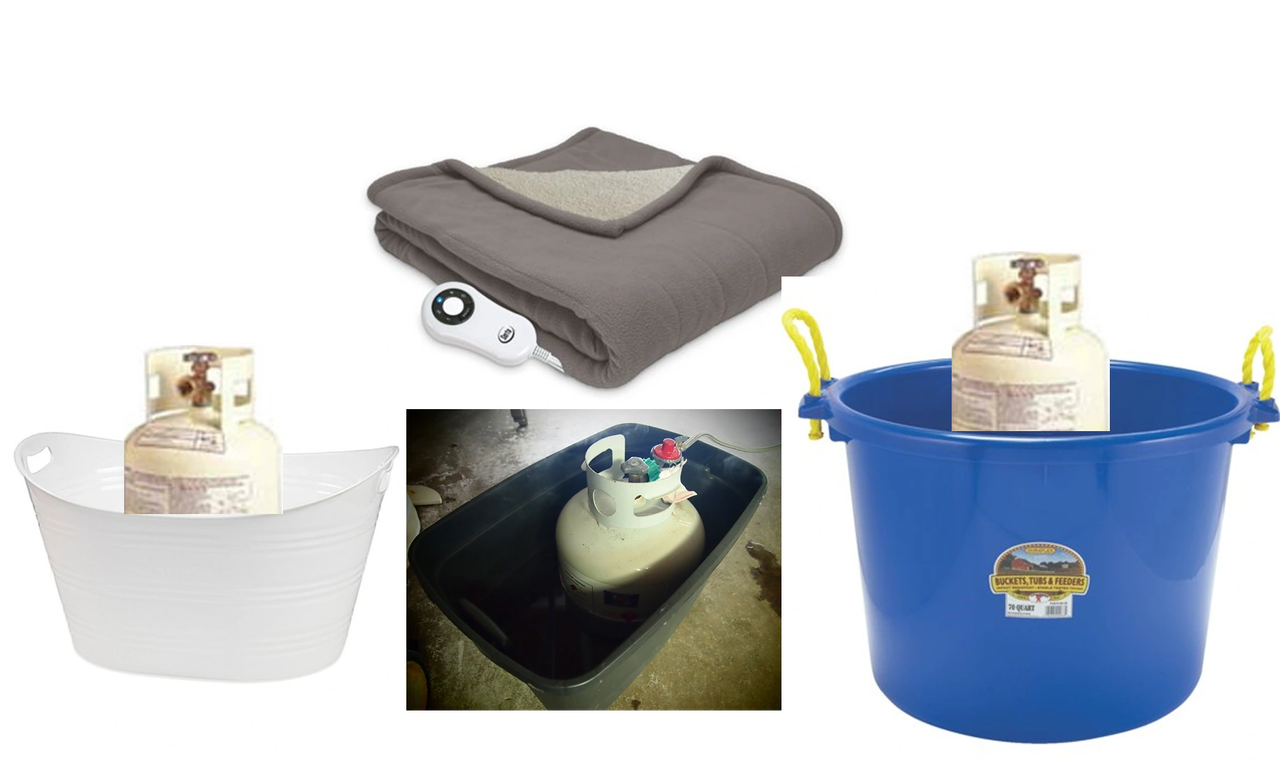
How can I unfreeze my tank or prevent “icing”?
- The Water Bath Method: Find a cheap party tub from a local hardware store (like the kind you put kegs or drinks in). Put the tank inside the tub and submerge 1/3 of the tank in water. This will insulate it and eliminate the icing up, even in cold weather. The water will get very cold (and great for keeping drinks around it COLD) but will not allow the tank to ice up for several hours. Changing the water will allow it to last for hours again.
- The Electric Blanket Method: An electric blanket or heating pad is an easy way to keep tanks warm, but it needs power. They are UL rated, washable, and produce an even amount of heat. Heating pads allow you to skip the water bath altogether, so less hassle.
Tip: We recommend a cotton sheet or a towel to wrap around the tank so that if any ice forms, it won’t make contact with the heating blanket.
If you have any more propane, fire pit, or fire feature-related questions, don’t hesitate to contact info@EasyFirePits.com, refer to our Q&A page, or take a look at our catalog. Visit EasyFirePits.com to shop for an array of DIY gas kits, or customize your kit with our wide-ranging product selection.